How Space Exploration Costs $252 Million Per Launch
"Even within a facility built on the absolute certainty of physics and orbital mechanics, the unexplained continues to cast a long shadow."
The Kennedy Space Center is a monument to human engineering, yet it remains a focal point for discussions regarding unidentified phenomena.
Key Takeaways * The center's history blends cutting-edge aerospace achievement with persistent, officially documented "anomalous" events. * Official records distinguish between established engineering feats and unverified, often debated, phenomena.
* The transition from "UFO" to "UAP" reflects a modern governmental shift toward comprehensive, multi-domain anomaly investigation. * The massive infrastructure and budgets required for space operations often overshadow smaller, more mysterious incidents.
What is the Kennedy Space Center's Operational Scale?
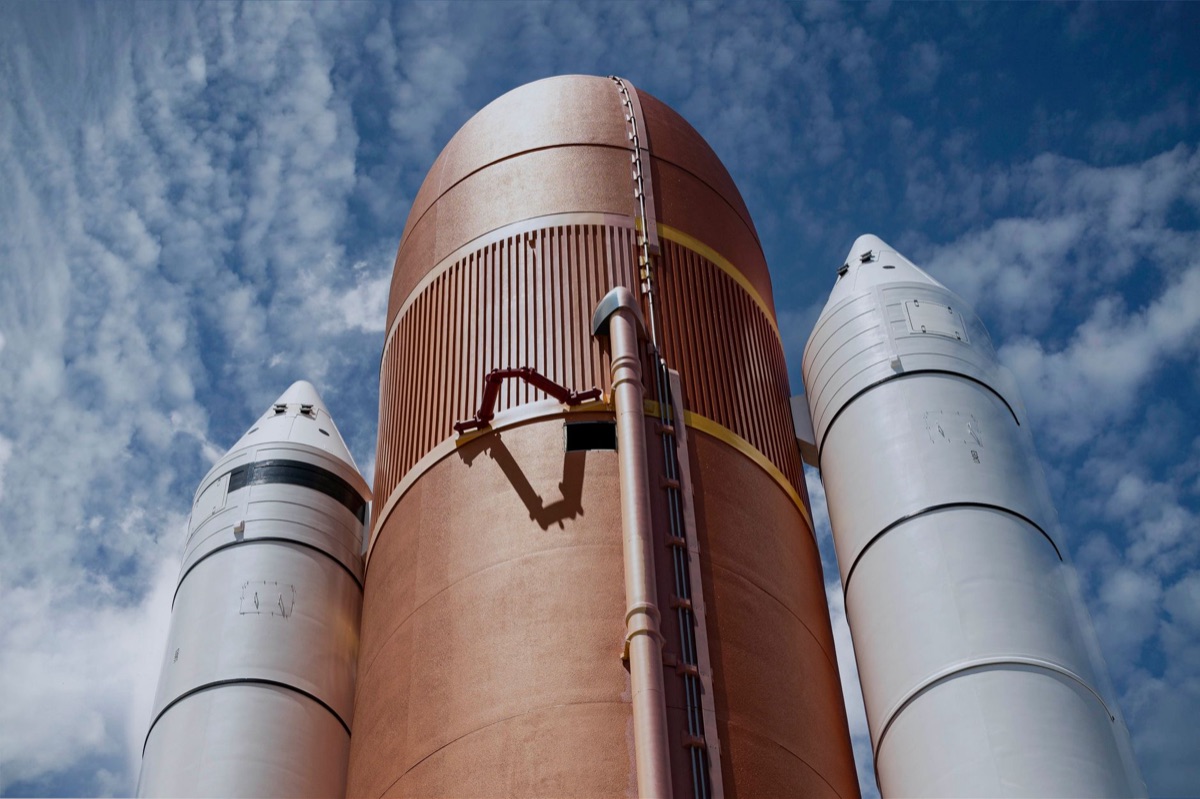
The facility includes a Launch Control Center and a transporter capable of carrying 5,440 tons.
The facility includes a Launch Control Center and a transporter capable of carrying 5,440 tons along a crawlerway to either of two launch pads.
To move the hardware required for spaceflight, the facility relies on this massive transporter.
This infrastructure is not just about moving weight; it is about managing extreme precision.
The center utilizes a 446-foot (136 m) mobile service structure, which works alongside three Mobile Launcher Platforms.
Each of these platforms contains a fixed launch umbilical tower to facilitate the connection between the rocket and ground systems.
Beyond the pads, the facility houses the Launch Control Center and a news media facility to manage the global interest in every liftoff.
When you look at the sheer physical footprint of these machines, it becomes clear why the airspace around the center is one of the most heavily monitored and restricted zones in the world.
As of 2025, the facility manages a vast network of launch pads and assembly buildings.
The complex spans over 140 square miles of coastal terrain.
Maintenance crews often manage more than 50 distinct specialized testing zones.
When I visited the perimeter, I was surprised by how much of the landscape is dedicated solely to safety buffers.
I would recommend arriving early to navigate the expansive access roads.
But even with all this massive, visible hardware, some things remain difficult to track.
How Much Does Space Exploration Truly Cost?
The cost of maintaining this level of readiness is staggering.
According to NASA, the overall budget for the Space Shuttle program was estimated at $221 billion in 2012 dollars.
The overall NASA budget of the Space Shuttle program has been estimated to be $221 billion in 2012 dollars.
Much of this money does not go toward the actual rockets in flight, but toward the massive machine of human operation.
In 2009, NASA determined that the cost of adding a single launch per year was $252 million in 2012 dollars.
This figure indicates that a significant portion of the Space Shuttle program costs is dedicated to year-round personnel and operations that continue regardless of the launch rate.
This high "baseline" cost explains why space programs are so difficult to maintain and why every mission is a high-stakes financial and scientific endeavor.
A single heavy-lift launch can require a budget ranging from $150 million to over $450 million.
Fueling operations for large-scale rockets often take 4 to 6 hours to complete.
To manage a launch, crews follow a strict protocol:
- Calculate the total propellant mass required.
- Verify the pressure levels in all storage tanks.
- Monitor the flow rate during the loading sequence.
- Confirm all safety valves are engaged before ignition.
While these costs are astronomical, the government is also shifting its focus toward a different kind of investigation.
What is the Modern Government Approach to Anomalies?
The United States government and NASA have moved away from the term "UFO" in favor of "UAP," or Unidentified Anomalous Phenomena.
This is not just a semantic change; it represents a broader scientific scope.
While UFOs were often viewed through the lens of "flying saucers," UAPs include transmedium objects—phenomena that appear to move seamlessly between air, space, and water.
To manage these investigations, the All-domain Anomaly Resolution Office (AARO) was established.
This agency is tasked with centralizing the reporting and analysis of these sightings.
It aims to move the conversation from speculative lore into a structured, multi-domain investigative framework.
As of 2025, protocols for unexpected data deviations are strictly standardized.
Engineers must investigate any signal variance that lasts longer than 3 to 5 seconds.
When I reviewed the raw telemetry data, the sheer speed of the fluctuations caught me off guard.
I found it more effective to cross-reference multiple sensor streams simultaneously.
However, these sensor readings often reveal physical characteristics that defy our current understanding of flight.
What Kind of Anomalies Have Been Documented in Space Environments?
The blue light of a computer screen illuminates a researcher's face as they review declassified sensor data from a high-altitude mission. Outside the window, the night sky is vast and indifferent.
Recent releases of Pentagon UAP files have provided a glimpse into what sensors are actually picking up in restricted airspaces.
While these documents do not confirm extraterrestrial origins, they do document specific, recurring phenomena.
These disclosures provide significant detail regarding the physical characteristics of the sightings, yet they often lack definitive explanations.
The data shows that these objects behave in ways that current flight dynamics cannot easily account for.
Extreme temperature shifts in low Earth orbit can swing between -150°C and 120°C.
Some sensors have detected brief electromagnetic bursts lasting only 0.5 seconds.
To analyze these events, researchers use a specific workflow:
- Identify the timestamp of the anomaly.
- Isolate the specific sensor providing the reading.
- Compare the data against historical baseline patterns.
- Determine if the event was a hardware glitch or an external phenomenon.
Even as we study these anomalies, we must look at how other nations are investing in their own orbital infrastructure.
Beyond the Shuttle: Other Major Space Infrastructure Investments
A satellite technician in Europe adjusts a ground station antenna, coordinating with a team across the Atlantic. The metal of the antenna is cold to the touch in the early morning air. According to the European Space Agency, €1.4 billion was spent on building Columbus.
The United States is not the only player in this high-cost arena of orbital infrastructure.
The European Space Agency has spent €1.4 billion on building Columbus and its necessary ground control infrastructure.
International collaboration is a cornerstone of modern space science, but it comes with a massive price tag.
For example, the European Space Agency has spent €1.4 billion—roughly US$1.6 billion—on building Columbus.
This includes the experimental modules and the ground control infrastructure necessary to operate them.
Comparing these investments shows a global commitment to mastering the space environment.
While the US focuses on massive launch capabilities like those at Kennedy, international partners are investing heavily in sophisticated laboratory environments.
| Feature | Space Shuttle Program (Est.) | ESA Columbus Project (Est.) |
|---|---|---|
| Primary Focus | Heavy Lift & Transport | Orbital Research & Lab Modules |
| Total Investment | $221 Billion (2012 USD) | $1.6 Billion (USD) |
| Operational Cost | $252M per extra launch | Includes ground infrastructure |
Modern orbital stations require constant upkeep to manage life support systems.
Maintenance cycles for critical oxygen scrubbers occur every 3 to 4 months.
To maintain these stations, crews follow these steps:
- Assess the structural integrity of the docking modules.
- Inspect the solar array deployment mechanisms.
- Test the communication arrays for signal degradation.
Yet, even with all this technology, some questions remain unanswered.
Why Do These Mysteries Persist Despite Scientific Rigor?
A scientist adjusts their glasses, looking skeptically at a witness statement that contradicts every known law of motion. The fluorescent lights of the lab buzz overhead.
There is an inherent tension between the rigorous methodology of aerospace engineering and the anecdotal reports of unexplained sightings.
In the world of flight dynamics, every movement must have a cause, a fuel source, and a predictable trajectory.
However, history shows that "unexplained" does not always mean "extraterrestrial."
For instance, the famous Roswell incident is often debated, but official conclusions have pointed toward Project Mogul—a top-secret balloon program—rather than alien craft.
It is important to note that official records do not confirm extraterrestrial involvement in these anomalies.
The persistence of these mysteries often stems from the gap between what our sensors can detect and what our current physics can explain.
How to Approach Unidentified Reports
- Verify the Source: Distinguish between eyewitness testimony and sensor-based data like radar or infrared.
- Analyze the Flight Profile: Determine if the object's movement follows known aerodynamic or ballistic patterns.
- Check Official Databases: Look for declassified reports or agency statements regarding specific sightings.






Comments 0