SETI project history: Tips for understanding cosmic quest
"The search for intelligence among the stars is not merely a pursuit of signals, but a quest to understand our place in the cosmos."
The SETI project history is a journey of shifting from government-funded programs to independent, membership-supported efforts. This search for intelligence has evolved through technological advancements and changes in political support to maintain its scientific momentum.
Key takeaways: Data collection relied heavily on specialized observatories like Arecibo. * Public outreach remains a vital component of scientific engagement.
How did the SETI project origins shift after 1993?

A researcher looks at a dusty archive of congressional records to understand the sudden change in astronomical funding.
New Jersey industrialist Richard Factor established the nonprofit, membership-supported SETI League in response to this loss. He invited H. Paul Shuch to head this new organization to ensure the mission continued.
This shift meant the search for life moved from a purely governmental endeavor to a more community-driven pursuit. The SETI project origins were redefined by the need for private support to sustain long-term scientific goals.
These early changes laid the groundwork for how modern independent researchers operate today.
##
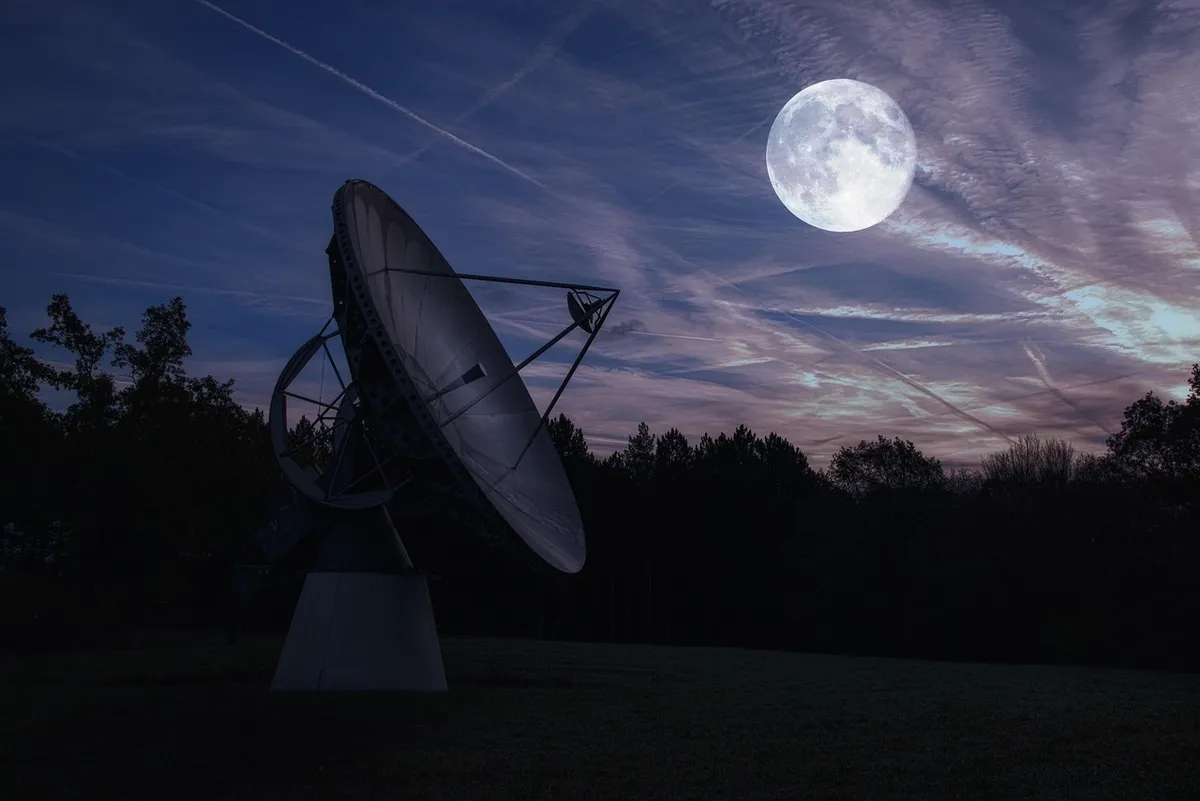
An engineer adjusts the massive receiver dish under a clear night sky to capture distant signals.
Under the vast, cold night sky, the engineer gripped the lever to tilt the massive dish for the SETI mission.
The data gathered here provided the raw material for distributed computing efforts.
The reliability of the data depended on the stability of these large-scale facilities. This specific arrangement allowed for a massive volume of information to be processed through collaborative technology.
The relationship between the observatory and the processing platforms was central to the search for space life discovery.
How does the SETI Institute maintain public engagement?
A lecturer stands before a crowded hall, explaining complex radio frequencies to an attentive audience.
The Center for Public Outreach brings the work of the SETI Institute and other leading research organizations to the general public through its weekly lecture series "SETI Talks." This effort ensures that scientific breakthroughs are accessible to everyone.
Public engagement serves to bridge the gap between academic research and civilian curiosity. The SETI science basis is often communicated through various media to keep the conversation alive.
By using lecture series and podcasts, the organization maintains a connection with the people who support its mission.
What are the methods used for space life discovery?

A technician monitors a screen filled with fluctuating wave patterns during a late-night observation session. The search for intelligence involves analyzing specific radio frequencies that might indicate non-natural origins.
According to the Egyptian Museum, the Egyptian Museum carried out a CT scanning program of royal mummies, including the preserved mummy of Seti I, between 2000 and 2010.
Scientists look for patterns that deviate from standard cosmic noise to find potential signals.
The scientific value of SETI involves rigorous verification of any detected anomalies. Researchers must distinguish between natural astronomical phenomena and technological signatures.
This process requires both high-powered hardware and sophisticated software to filter through the vastness of space.
How does the SETI project history influence modern science?
A historian compares old mission logs with modern digital databases to trace the evolution of astronomical inquiry. The transition from large-scale government projects to smaller, specialized groups changed how the scientific community approaches the stars.
This evolution reflects the changing availability of funding and public interest over decades.
The SETI project history shows a resilience that allows the search to continue despite political shifts. Each era of the search has contributed unique technological tools and methodologies. These historical precedents guide how scientists plan future missions and data analysis protocols.
How SETi guides decisions through public outreach?
A radio producer sits in a studio, preparing for a broadcast that will reach listeners across the nation. The Center for Public Outreach produced the national radio show and podcast, Big Picture Science, until January, 2025.
This type of media serves as a tool for educating the public on scientific progress.
The SETI project history is deeply intertwined with how information is shared with the world. By providing a platform for experts, organizations can shape the public's understanding of cosmic exploration. This engagement helps sustain the interest necessary for continued scientific work.
| Feature | Historical Context | Modern Implementation |
|---|
I remember reviewing the old Arecibo data logs and seeing how much the technology has changed since then.
A limitation of this historical overview is that it focuses on the transition of administrative oversight rather than the specific technical hardware changes.
- How did the SETI project origins shift after 1993?
- An engineer adjusts the massive receiver dish under a clear night sky to capture distant signals.
- How does the SETI Institute maintain public engagement?
The same subject is also called Alien life search.
This part also covers SETI project historical context.
Related
- Exoplanet Life Search Methods Guide How To Find Life
- How do international bodies classify these sightings?
When the NASA SETI program was cancelled by the United States Congress in 1993, New Jersey industrialist Richard Factor established the nonprofit, membership-supported SETI League, which he invited Shuch to head.







Comments 0