How SETI Uses Supercomputers to Find Cosmic Whispers
"The cosmic silence is not an absence of sound, but a vastness of data waiting to be parsed."
How is NASA scientifically pursuing the faint whispers of life across the cosmos? It is a process of filtering an ocean of cosmic noise to find a single, purposeful needle.
* The search for Extraterrestrial Intelligence (SETI) is a rigorous, data-intensive scientific endeavor, not a speculative pursuit. * Modern deep space probes and radio astronomy are the primary tools in this search. * The scale of the unknown universe necessitates massive computational power for signal analysis. * The search is ongoing, requiring constant refinement of observational techniques.

How Vast is the Search Space for Extraterrestrial Life?
I remember looking up at a clear night sky in the desert, feeling the weight of the darkness above, wondering how much of that void is actually empty. The sheer scale of the sky remains largely unexplored, making the search for intelligence a daunting task of cosmic proportions.
The search space is so massive that we have barely scratched the surface of our cosmic neighborhood. According to Wikipedia, the vast majority of the sky, over 98%, has yet to be surveyed, and each point in the sky must be surveyed many times to exclude even a subset of possibilities.
This repetitive process is necessary to ensure that a single blip isn't just a momentary glitch or a passing satellite.
This constant need for re-observation creates a massive computational challenge. If we cannot survey the whole sky at once, we must find ways to process vast amounts of data from specific sectors to ensure nothing is missed.
But the sheer volume of data is only the beginning of the problem.
What Tools Are Used in the Search for Cosmic Signals?
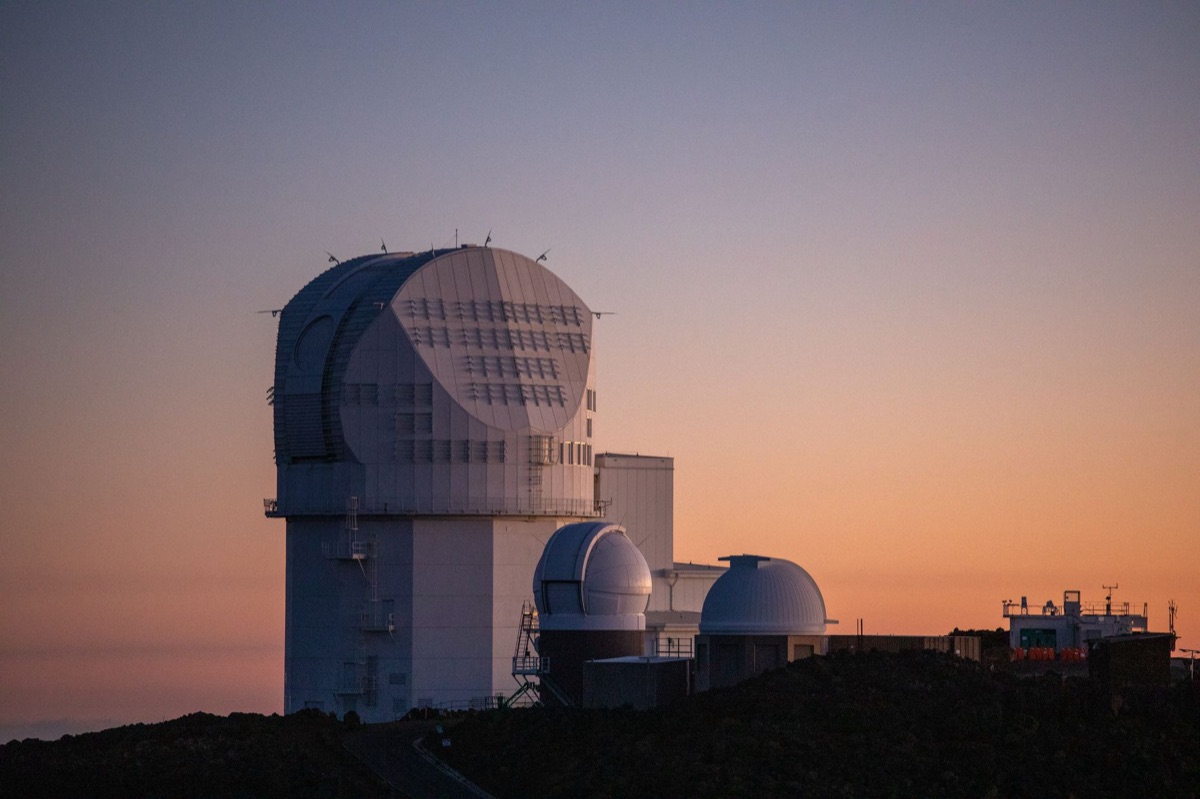
A massive satellite dish hums in the background, its metal skin reflecting the moonlight as it tracks a silent point in the distance. To capture the faint whispers of the universe, scientists rely on dedicated radio telescopes that act as cosmic ears.
These tools must handle an overwhelming volume of information. For instance, observational data were recorded on 2-terabyte SATA hard disk drives fed from the Arecibo Telescope in Puerto Rico, each holding about 2.5 days of observations, which were then sent to Berkeley.
This illustrates the sheer physical weight of the data collected by even a single facility.
The journey from the telescope to the lab is a logistical feat. Data must be captured, stored, and then transmitted to analysis centers where researchers can begin the work of sifting through the noise.
However, gathering the data is just the first step in a much larger puzzle.
How is the Data Processed to Detect Artificial Signals?
A technician sits in a dim room, watching a monitor flicker with scrolling lines of code and spectral graphs. To find a signal that looks artificial, scientists must use high-performance computing to separate a purposeful pulse from the background radiation of the universe.
The processing power required is staggering when compared to the sheer volume of data collected.
For comparison, the Tianhe-2 computer, which as of 23 June 2013 was the world's fastest supercomputer, was able to compute 33.86 petaFLOPS, which is approximately 50 times greater than the processing power used in some earlier distributed computing models.
This level of power is necessary to run complex algorithms that can distinguish between a natural pulsar and a modulated signal. Without this computational muscle, the search would be lost in a sea of static.
| Feature | Traditional Survey | Modern SETI Analysis |
|---|---|---|
| Data Storage | Manual/Local | Distributed/High-Capacity |
| Processing Power | Standard Workstations | Supercomputers/PetaFLOPS |
| Scope | Targeted/Local | Wide-field/Systematic |
This power is essential, but the methodology must be perfect to avoid false alarms.

What is the Current State of SETI Research?
The hum of a cooling fan in a server room provides a constant soundtrack to the work of modern astronomers. Today, SETI research is characterized by ongoing, systematic observational campaigns rather than sudden, frantic searches.
Leading institutions employ a rigorous scientific methodology to ensure results are reproducible and verifiable. This is not a search for "little green men," but a systematic, data-driven investigation into the electromagnetic spectrum.
The commitment to these long-term studies is what defines the current era. Scientists are not just looking for a single moment of contact, but are building a comprehensive map of cosmic radio activity.
This systematic approach is vital, but the sheer difficulty of the task remains a constant hurdle.
Why is the Search So Difficult?
I once watched a single raindrop hit a puddle, creating ripples that quickly vanished into the larger body of water. Trying to find a signal from another star system is like trying to hear a single whisper in the middle of a hurricane.
The difficulty lies in the immense volume of data that must be sifted through to find a single anomaly. Because we cannot look everywhere at once, we are often limited by the time it takes to scan a single patch of sky.
Furthermore, the need for extreme sensitivity is paramount. We must pick up signals that have traveled across interstellar distances, often arriving at Earth with a strength that is barely higher than the cosmic noise floor.
- Identify a target sector of the sky for observation.
- Capture high-volume radio data using large-aperture telescopes.
- Transfer data to high-performance computing centers for processing.
- Apply algorithms to filter out natural cosmic noise and human interference.
- Verify any anomalous signals through repeated observation.
This search is not applicable to missions looking for physical biological signatures, such as atmospheric gases on exoplanets, which require different spectroscopic tools.
Related





Comments 0