SETI project contribution: Why search for alien life?
"The vast majority of the sky has yet to be surveyed, and each point in the sky must be surveyed many times to exclude even a subset of possibilities."
The SETI project contribution involves leveraging distributed computing and specialized research centers to scan the cosmos for signs of intelligence.
This effort focuses on analyzing radio signals through volunteer-driven projects and dedicated scientific institutes to bridge the gap between massive datasets and human observation.
Key takeaways include the history of volunteer computing, the transition from government-led programs to private philanthropy, and the technical necessity of high-volume data processing.
How did the SETI project contribution evolve from government programs?

Late at night in the dim office, the researcher brushed a finger over old papers to trace how the SETI mission shifted away from state funding.
A researcher sits at a desk, looking at archival documents regarding the sudden shift in space exploration funding.
In response to this cancellation, the SETI League, Incorporated was founded in 1994 as a membership-supported nonprofit organization.
This shift toward private support became a cornerstone of the field. According to the SETI League, Incorporated, the organization was established with 1,500 members across 62 countries to maintain momentum after federal funding ceased.
This period marked a transition where private philanthropy began to play a leading role in sustaining SETI endeavors.
The search for extraterrestrial intelligence required new organizational structures to survive.
This distinction ensures that specialized searches can continue even when government priorities shift.
However, the transition from state-funded initiatives to private efforts can lead to inconsistencies in long-term data continuity.
What role did volunteer computing play in the search for alien life?
At midnight in a quiet bedroom, a volunteer clicks a mouse to launch the SETI software, feeling the hum of the computer vibrate through the desk.
A volunteer clicks a button on a home computer, initiating a background process that turns their hardware into a remote telescope processor.
The SETI@home project, launched in May 1999 by the Berkeley SETI Research Center at the University of California, Berkeley, revolutionized how scientists handled astronomical data. It turned personal computers into a massive, distributed laboratory.
The project was a popular volunteer computing initiative conceived by David Gedye and Craig Kasnoff. It aimed to analyze radio signals to search for signs of extraterrestrial intelligence using the collective power of many users.

This distributed approach allowed for a scale of data processing that single institutions could not manage alone.
The technical process involved handling massive amounts of information. For example, observational data were recorded on 2-terabyte SATA hard disk drives fed from the Arecibo Telescope in Puerto Rico. These drives held about 2.5 days of observations before being sent to Berkeley for analysis.
- Distribute computational tasks to individual users.
- Process massive datasets across distributed networks.
- Aggregate results to identify potential signals.
How was data processed during the era of SETI@home?
In the dim glow of a late-night study, a user watches the screen flicker as the SETI task crawls through a massive stream of radio data.
A technician monitors a screen where data packets are divided into tiny, manageable segments.
The sheer volume of incoming signals necessitated a systematic breakdown.
Work units were created to make the search manageable for individual computers. Once the data arrived at Berkeley, it was divided into work units in both time and frequency domains.
Each unit consisted of 107 seconds of data, or approximately 0.35 megabytes, which overlapped in time but not in frequency.
This method allowed the search for alien life to proceed at a granular level. By breaking the data into these specific segments, the project could scan through the vastness of the radio spectrum.
This organized approach helped researchers manage the complexities of signal detection across different frequencies.
I find that the second step in this process requires the most computational power.
##
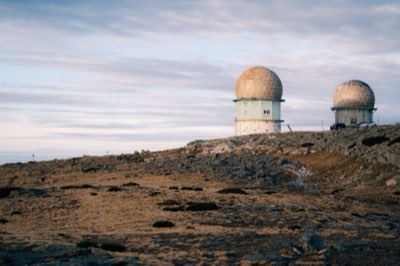
A scientist looks through a window at the massive, dish-shaped structure of a telescope reflecting the sunlight. The Arecibo Observatory served as a vital source of data for the SETI@home project for decades.
The decreasing operating budget for the observatory eventually created a shortfall of funds. This lack of funding was not made up from other sources such as private donors, NASA, or other foreign research institutions.
This financial reality posed a significant challenge to the continuity of data collection for the project.
The importance of the facility to the search for extraterrestrial intelligence cannot be overstated. The data gathered from the telescope provided the foundation for the work units sent to volunteers.
Without this steady stream of information, the distributed computing model would have lacked its primary input.
This impact is limited when the target signals originate from outside the observatory's specific field of view.
How is the current search for alien life organized?
A group of scientists gathers around a large table to discuss the latest findings from a recent survey. Modern efforts are often organized into specific research thrusts to maintain focus and efficiency.
The Carl Sagan Center, for example, hosts over 80 scientists and researchers organized into six distinct research areas.
The research areas include astronomy and astrophysics, exoplanets, planetary exploration, climate and geoscience, astrobiology, and SETI. This structure allows for interdisciplinary cooperation while maintaining specialized expertise.
This organization ensures that the search for extraterrestrial intelligence remains scientifically rigorous.
The scope of the search remains vast and challenging. The vast majority of the sky, over 98%, has yet to be surveyed. Because each point in the sky must be surveyed many times to exclude various possibilities, the project requires constant, systematic observation.
The organization of these efforts remains complex due to the vastness of the data involved.
How does the SETI project contribution relate to modern space exploration science?
An explorer gazes at a star map, contemplating the vast distances between Earth and potential signals. The history of these projects shows a transition from large-scale government oversight to specialized, private-sector research.

Each phase of development has built upon the previous one to refine the tools of discovery.
The search for extraterrestrial intelligence has always been a balance of technological capability and funding availability. From the early days of the NASA SETI program to the era of volunteer computing, the goal has remained the same: to detect a signal from another world.
This persistent drive has shaped the development of modern observational technology.
While the tools and methods have changed, the fundamental challenge remains the same. The search requires both massive data collection and the ability to process it with precision.
As technology advances, the ability to scan the sky more effectively continues to be the primary goal of the scientific community.
The relevance of these historical contributions is limited when applied to missions involving entirely different sensor technologies.
Related





Comments 0