SETI project scientific basis: 12 hours search how signals
"The search for extraterrestrial intelligence requires constant vigilance and specialized technology to catch fleeting signals from the stars."
The SETI project scientific basis relies on utilizing advanced radio telescopes and specialized arrays to scan the cosmos for non-natural signals. Researchers use these tools to monitor the skies for transient signals that might indicate intelligent life.
This guide explores the methodologies of signal detection, the history of private funding, and the technical frameworks used in the search for alien life.
How do researchers pursue the SETI project scientific basis?
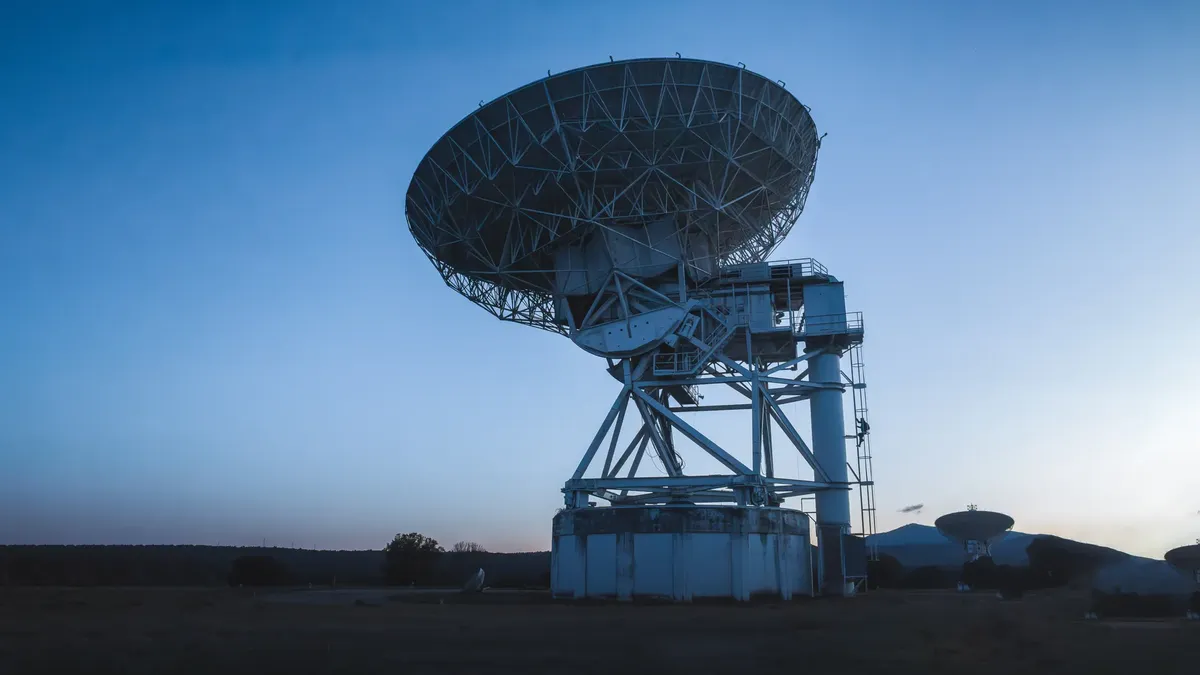
A researcher sits at a workstation, watching a spectrum analyzer for any sudden spike in radio frequency. This constant observation is necessary to capture signals that may only last for a short duration.
The SETI Institute's Center for SETI Research (CSR) uses the Allen Telescope Array (ATA) in the search for extraterrestrial intelligence, observing 12 hours a day, 7 days a week. This consistent monitoring allows scientists to scan vast portions of the sky for anomalies.
The work involves analyzing data to distinguish between natural cosmic noise and potential technological signatures.
The search for alien life involves scanning specific frequencies where interference is minimal. Scientists look for narrow-band signals that do not occur naturally in the universe. By focusing on these specific windows, they maximize their chances of detecting a meaningful transmission.
How can we actually find alien life? An astronomer adjusts the calibration on a radio telescope, preparing for a long night of data collection. The equipment must be precise to detect the faint whispers of distant civilizations.
In the past, the search for alien life was limited by much smaller windows of observation. Previously, only about 24 to 36 hours of telescope time per year were used in the search for alien life.

Modern projects have expanded this significantly, utilizing major observatories to conduct thousands of hours of observation every year.
| Era | Annual Observation Time |
|---|---|
| Previous Methods | 24 to 36 hours |
| Modern Projects | Thousands of hours |
I remember reading about how much the scale of these observations has shifted from mere snapshots to continuous monitoring. This transition represents a fundamental change in how we approach the search for extraterrestrial signals.
According to SETI Institut, the 2012 record includes 2 million.
How did private funding impact the search for extraterrestrial signals?
A benefactor signs a document that ensures a research program can continue despite the absence of government support. This financial lifeline keeps the telescopes spinning and the data flowing.
According to the SETI Institut, in 2012 it cost around $2 million per year to maintain SETI research at the SETI Institute and around 10 times that to support different SETI activities globally.
When government support shifted, private entities stepped in to maintain the momentum of cosmic discovery. In 1995, the nonprofit SETI Institute of Mountain View, California resurrected the MOP program under the name of Project "Phoenix", backed by private sources of funding.
This ensured that the mission of searching for extraterrestrial signals did not cease due to budget cuts.
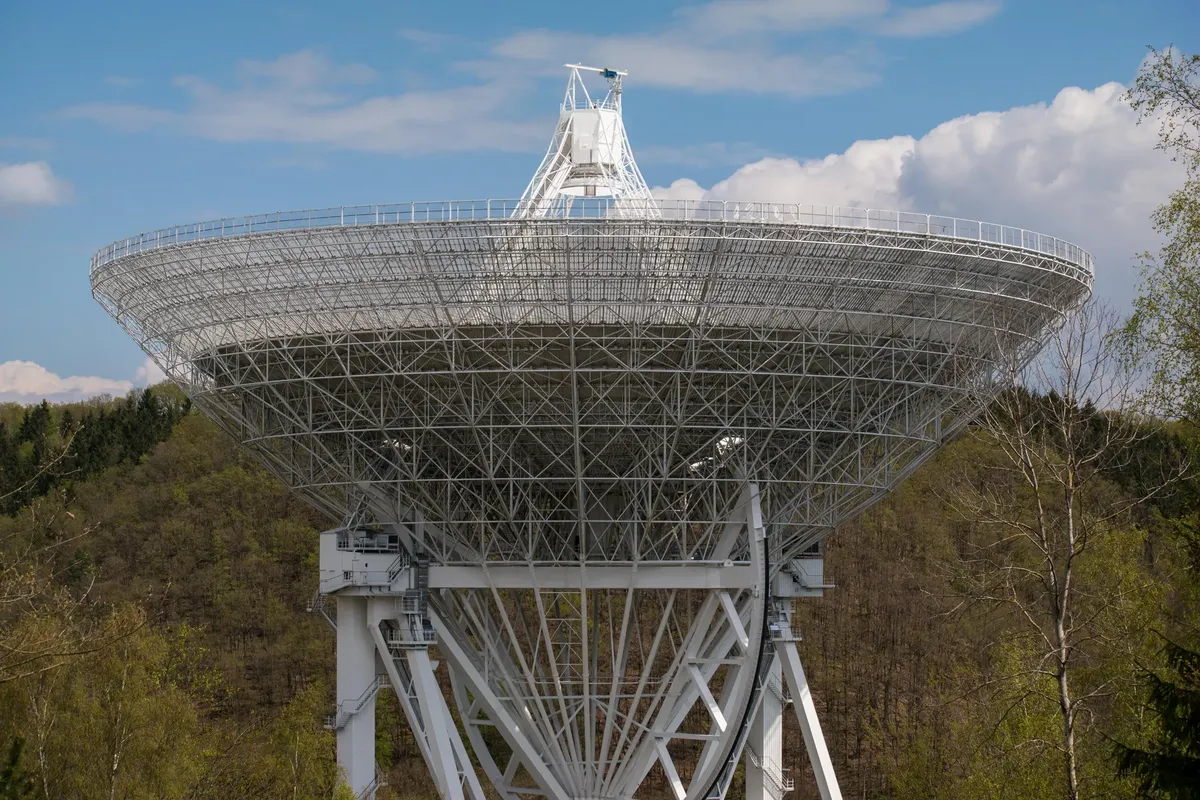
The history of these programs shows a transition from state-led initiatives to diverse, privately-supported scientific endeavors. This shift has allowed specialized research to persist through various political and economic climates.
What tools can find signals from space? A technician checks the alignment of a large radio dish, ensuring it points accurately toward a specific coordinate in the sky. Precision is the backbone of all radio astronomy.
Scientists use various high-powered instruments to conduct their work across different wavelengths. For example, the project announced in July 2015 uses two major radio telescopes: the Green Bank Observatory in West Virginia and the Parkes Observatory in Australia.
These facilities provide the sensitivity required to detect weak signals from deep space.
The search for extraterrestrial signals often requires a combination of ground-based arrays and satellite-compatible technology. By utilizing multiple locations, researchers can better triangulate potential sources and account for local interference.
What is the future of space communication in SETI?
A scientist looks toward the horizon, considering how future technologies might bridge the gap between Earth and distant worlds. The possibility of a breakthrough drives every calculation.

The future of space communication remains a central theme in the scientific community. Researchers are constantly refining their techniques to handle the massive influx of data from increasingly sensitive instruments.
This includes developing better algorithms to separate signals from the background noise of the universe.
The search for extraterrestrial signals is a marathon, not a sprint. As technology improves, the ability to detect more distant or weaker signals will continue to expand, opening new possibilities for discovery.
- How do researchers pursue the SETI project scientific basis?
- What are the methods for the search for alien life?
- How did private funding impact the search for extraterrestrial signals?
Related
- UFO secret docs released: 161 documents guide to phenomena
- FBI UFO conspiracy vs reality: Official protocols vs rumors
How is the search for extraterrestrial intelligence conducted practically?
- The search for extraterrestrial intelligence begins with the constant monitoring of radio spectrum analyzers. 2. Researchers must watch for any sudden spike in the radio frequency spectrum. 3. This ongoing observation is crucial for capturing signals that might be brief.
The SETI Institute's Center for SETI Research employs the Allen Telescope Array during its operations. This activity spans 12 hours each day, seven days a week. This dedication to monitoring allows scientists to examine extensive areas of the sky for unusual occurrences.
The process involves detailed data analysis to differentiate between natural cosmic background noise and potential technological transmissions.
What cautions accompany the search for extraterrestrial signals?
- Researchers must focus on specific frequencies where background interference is low. 2. They seek narrow-band signals because these are less likely to be natural occurrences. 3. Concentrating on these particular spectral windows increases the probability of finding a genuine transmission.
The search for extraterrestrial signals faces the condition that many detected signals are ultimately classified as noise or local interference. This caution arises because transient signals often appear to be caused by satellites or transmitters on Earth.
The rigorous observational methods provide a structured way to pursue the search for extraterrestrial intelligence despite these limitations.




Comments 0